
Why a Window Treatment Measuring Service Matters
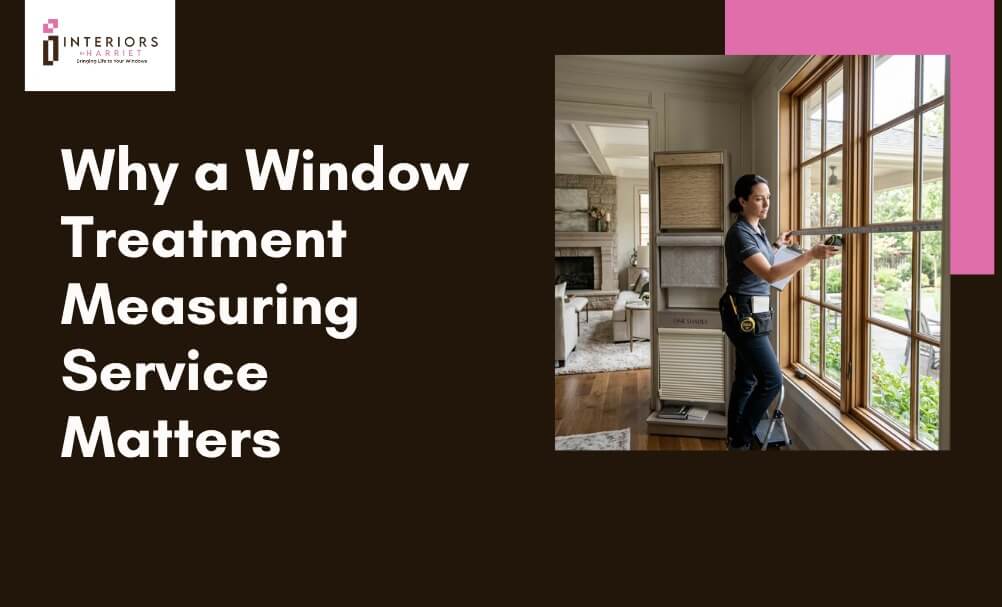
Every window may look simple at first, but no two windows are always exactly the same. Small differences in width, height, frame depth, or trim can change how a shade or blind fits. Even a window that looks like a standard size may have slight differences that are easy to miss when measuring it yourself.
These small details become important when you order custom window treatments. A measurement that is even a little off can leave unwanted gaps around the edges. The shade may not hang properly, the blind may be difficult to use, or the treatment may not fit inside the window at all. With a custom-made product, fixing the mistake may also mean placing a new order, which can add extra time and cost.
A professional window treatment measuring service helps prevent these problems before your order is placed. A trained professional carefully checks the size, depth, frame, mounting space, and other details that can affect the final fit.
Accurate measuring is an important first step toward window treatments that look beautiful and work properly. In this guide, you’ll learn what professional measuring includes, why it matters, and how it can make the entire process easier from selection to installation.
What Is a Window Treatment Measuring Service?
A window treatment measuring service involves a trained professional visiting your home to take detailed, accurate measurements of each window before any product is ordered. This goes well beyond a single width-by-height measurement.
A thorough professional measurement includes:
- Window width and height, taken at multiple points across the opening
- Window depth, to confirm sufficient space for inside-mount hardware
- Trim and molding profiles, which affect mounting options and clearance
- Frame squareness, since frames that aren’t perfectly square require specific installation adjustments
- Inside- vs. outside-mount suitability, based on depth, trim, and structural factors
- Potential obstructions, such as handles, locks, cranks, radiators, or nearby furniture
Hunter Douglas specifically recommends that homeowners use a window covering professional to measure and install window shades and blinds for proper fit and function (Hunter Douglas). Professional measurement isn’t just a convenience it’s a meaningful part of getting custom window coverings right.
Why Accurate Window Measurements Matter
Precision in window covering measurements affects far more than fit alone. It shapes the overall appearance of a room, the day-to-day functionality of each treatment, and the total cost of the project.
Better Fit
Proper measurements help avoid coverings that are too wide, too narrow, too short, or too long. Even a quarter-inch discrepancy can create visible gaps or prevent an inside-mount shade from operating smoothly within the frame.
Better Appearance
A properly fitted treatment looks intentional and professionally finished. Coverings that are slightly off tend to draw the eye for the wrong reasons bunching at the bottom, exposing frame edges, or sitting unevenly.
Better Function
Correct sizing supports smooth opening, closing, tilting, and motorized operation. A shade that’s too wide for its opening, or mounted without enough depth clearance, may bind, tilt, or fail to retract properly.
Less Risk of Costly Reordering
Custom-made products are built to specific dimensions. Measurement errors don’t result in a quick exchange they result in a new order. A professional window treatment measuring service significantly reduces that risk before any product is manufactured.
Inside Mount vs. Outside Mount: Why Measuring Changes
One of the most consequential decisions in any window treatment project is whether to use an inside mount or an outside mount. That choice directly affects how measurements are taken and whether a particular window can even support each option.
Inside Mount
An inside-mount treatment sits within the window opening, creating a clean, recessed look that highlights the window frame and trim. To achieve this, the window must have sufficient depth to accommodate the mounting hardware. Measurements must reflect the exact interior dimensions of the opening, and the professional will check whether the frame is square and level enough for a clean fit.
Outside Mount
An outside-mount treatment attaches to the wall or trim above the window opening, with the covering extending beyond the opening on all sides. This approach works well when window depth is limited, when frames are out of square, or when greater light blockage is a priority. It can also create the visual impression of a larger window.
Which One Is Better?
The right choice depends on a combination of factors: the window’s construction, the depth of the frame, how much light control you need, the style of the room, the profile of the trim, and the specific product being installed. Hunter Douglas identifies frame squareness and inside-versus-outside mounting as key considerations for achieving proper fit (Hunter Douglas). A professional can evaluate all of these factors during the measuring appointment.
What Does a Professional Measure During the Appointment?
A professional measurement visit covers considerably more ground than a single tape measure reading. Each element below contributes to a product that fits, functions, and installs correctly.
Window Width
Measured at the top, center, and bottom of the opening. Variations between these points indicate whether the frame is square.
Window Height
Measured along both sides and at the center. Combined with diagonal measurements, this reveals whether the opening is level and true.
Window Depth
The depth of the window frame determines whether an inside mount is feasible and what hardware will fit without obstruction.
Frame and Trim
The profile and projection of surrounding trim affects mounting options, bracket placement, and how the finished product will appear against the wall.
Mounting Surface
The professional assesses what type of surface the brackets will attach to wood, drywall, metal framing, or another material and whether anchors or special hardware will be needed.
Handles and Hardware
Window cranks, locks, and lift mechanisms can obstruct a treatment if not accounted for during measurement. These details inform product selection as well as mounting placement.
Nearby Furniture or Fixtures
Radiators, built-in shelving, or furniture placed close to the window can affect how a treatment is mounted and operated.
Window Shape and Alignment
For specialty windows arched, angled, or unusually proportioned additional measurements and planning are required to achieve a proper fit.
Each of these factors contributes something a basic DIY measurement with a tape measure is unlikely to capture fully.
Why Custom Window Treatments Need Precise Measurements
Custom window treatments differ from off-the-shelf products in one fundamental way: they are manufactured to fit a specific window, not a standard size. That distinction makes accurate measurement essential from the start.
Custom products involve choices across a wide range of variables: exact dimensions, fabric or material type, opacity level, specialty shapes for arched or angled windows, motorization systems, and targeted light-control or privacy goals. None of these work as intended if the underlying measurements are off.
Ready-made blinds and shades are mass-produced to fit a limited set of standard window sizes. Many windows particularly in older or custom-built homes don’t conform to those sizes. Hunter Douglas notes that a window treatment specialist measures custom blinds, shades, drapery, and shutters so the finished product fits the specific window rather than approximating it. This is the core value a professional window treatment measuring service provides.
Window Treatment Measuring Service for Different Products
Measurement requirements vary depending on the type of window covering being installed. A professional accounts for these differences during the appointment.
Measuring for Blinds
Width, height, slat clearance, and mount type all require careful attention. For inside-mount blinds, the frame depth must accommodate the headrail without obstruction.
Measuring for Shades
Roller, Roman, cellular, and other custom shade styles each have specific measurement needs. Roman shades, for example, require precise height measurements to ensure the fabric folds land correctly.
Measuring for Draperies
Custom drapery measurements go beyond the window itself. Rod width, finished panel length, floor clearance, stacking space at the sides, and fabric fullness all factor into a professional measurement for drapes.
Measuring for Shutters
Shutters require frame configuration measurements, hinge clearance, depth assessment, and precise panel sizing. Even small variations in frame depth can affect how shutter panels align and operate.
Measuring for Motorized Window Treatments
Motorized window treatments demand additional considerations: clearance for the motor housing, power source proximity, shade alignment across multiple windows, and smart-home integration planning. These variables make professional measurement especially important for automated systems.
Common DIY Measuring Mistakes
Many homeowners attempt to measure their own windows before ordering custom treatments. The process seems straightforward but several common errors can lead to products that don’t perform as expected.
- Measuring only once, rather than at multiple points across the opening
- Assuming every window is identical, even in the same room or along the same wall
- Rounding measurements incorrectly, when custom manufacturing requires precision to the nearest fraction of an inch
- Forgetting window depth, a critical factor for inside-mount treatments
- Ignoring trim and molding, which affects bracket placement and visual finish
- Choosing the wrong mount type without fully understanding the window’s construction
- Overlooking handles, locks, or cranks that could obstruct the treatment
- Measuring the glass rather than the correct opening or frame
- Failing to check whether the frame is square, which affects fit and operation
These aren’t beginners’ oversights even experienced DIYers encounter them. A professional window treatment measuring service eliminates most of these risks before an order is placed.
Professional Measuring vs. DIY Measuring
| Factor | DIY Measuring | Professional Measuring |
|---|---|---|
| Accuracy | Depends on experience | High |
| Mount Evaluation | Often overlooked | Included |
| Window Depth | May be missed | Checked |
| Obstructions | Easy to overlook | Reviewed |
| Product Compatibility | Limited knowledge | Expert guidance |
| Custom Fit | Greater risk | Better confidence |
| Installation Planning | Separate step | Coordinated |
How Professional Measuring Helps With Installation
Measurement and installation work best when they are treated as a connected process rather than two separate steps. A professional who measures your windows can plan ahead for bracket placement, mounting surface requirements, hardware spacing, shade alignment, and product clearance all before the treatment arrives.
For motorized products, this coordination is especially valuable. Power locations, component clearance, and alignment across multiple windows all need to be accounted for during the planning phase. Hunter Douglas recommends using a window covering professional for both measurement and installation to achieve proper fit and function (Hunter Douglas). When the same expertise guides both steps, the result is a cleaner install and a finished product that operates as designed.
Can Professional Measuring Improve Light Control and Privacy?
Yes with some nuance. Correct sizing helps a treatment cover the window opening as fully as the product design allows. Gaps that result from incorrect measurements can allow light to spill in around the edges, undermining the coverage a homeowner intended to achieve.
For bedrooms where privacy is a priority, street-facing windows where passersby are a concern, or living spaces where glare reduction matters, accurate window covering measurements make a practical difference. Room-darkening applications in particular benefit from a treatment that fits the opening precisely.
That said, some window treatment styles, particularly inside-mount options with close tolerances, have small inherent side gaps by design. A professional can explain what to expect from each product type so there are no surprises after installation.
Why Measurement Matters for Motorized Window Treatments
Motorized window treatments introduce a layer of complexity that makes professional measurement even more valuable. Motor housings require specific clearance within the headrail space. Shades that will operate in groups need to be aligned consistently across multiple windows. Power source locations influence both mounting position and installation approach.
For large or hard-to-reach windows, motorization offers significant practical advantages but only when the treatment is sized and installed correctly. Smart-home planning, which may involve coordinating with voice control systems or automated schedules, also benefits from careful upfront measurement. If you’re considering motorized options, discussing them during a professional consultation ensures the measuring visit captures everything relevant to the final installation.
When Should You Schedule a Window Treatment Measuring Service?
A professional measuring appointment is worthwhile in a wide range of situations:
- Before ordering any custom shades or custom blinds
- After windows have been replaced or reframed
- During a home renovation or remodel
- When moving into a new home with unfamiliar window dimensions
- When replacing old or damaged blinds and shades
- Before ordering motorized products
- When covering unusually shaped, oversized, or architecturally distinctive windows
The earlier a window treatment measuring service is scheduled in the process, the more smoothly the subsequent steps product selection, ordering, and installation tend to go.
Why Measuring Should Come Before Ordering
The ideal sequence for any custom window treatment project follows a clear path:
Consultation → Product Selection → Professional Measuring → Ordering → Installation
Skipping or reversing any step in this sequence increases the likelihood of errors. Product selection without measurement can lead to choosing options that don’t suit the window’s construction. Ordering before measuring turns a fixable issue into an expensive one.
A custom window treatment specialist can guide you through each stage of this process as a coordinated whole, from initial design conversation to final installation (Hunter Douglas).
[Schedule Your Window Treatment Consultation]
Frequently Asked Questions
Why should I use a window treatment measuring service?
A professional window treatment measuring service helps ensure your custom blinds, shades, or draperies fit correctly, operate smoothly, and look as intended. It reduces the risk of costly reordering due to measurement errors and accounts for factors like frame squareness, window depth, and obstructions that DIY measuring often misses.
Can I measure my own windows for blinds and shades?
DIY measuring is possible for straightforward, standard-sized windows. However, custom window treatments are manufactured to exact specifications, and small errors can result in products that don’t fit. Professional measurement provides greater accuracy and accounts for mounting conditions that affect the final result.
Do all windows need to be measured separately?
Yes. Even windows that appear identical along the same wall or in the same room often have small dimensional differences. Frame depth, levelness, and squareness can vary from one opening to the next, making individual measurement worthwhile for each window.
What is the difference between inside and outside mount measurements?
An inside mount sits within the window opening and requires measurements of the interior frame dimensions, including depth. An outside mount attaches to the wall or trim above the opening, with measurements taken to determine coverage width and height beyond the opening itself.
Is professional measuring necessary for motorized shades?
Professional measuring is especially important for motorized shades. Accurate dimensions ensure proper motor clearance, correct shade alignment, and appropriate power source planning. Since motorized treatments involve greater complexity and greater investment getting the measurements right before ordering is well worth the step.
Start With the Right Measurements
Beautiful window treatments begin with accurate planning. A professional window treatment measuring service accounts for the details that make the difference between a product that fits perfectly and one that falls short literally and figuratively.
The benefits of professional measurement are concrete: better fit, better appearance, smoother operation, fewer ordering complications, and a more confident path from selection to installation. Custom blinds, shades, draperies, shutters, and motorized treatments all perform better when the measurements behind them are right.
At Interiors by Harriet, professional guidance supports every stage of the process from the first design conversation to properly measured and beautifully installed window treatments. Whether you’re planning custom shades, custom blinds, custom draperies, shutters, or motorized window treatments, careful measuring helps ensure the finished result looks and works exactly as it should. Schedule a Consultation with Interiors by Harriet