Window Treatments for Tall Windows: What Works Best?
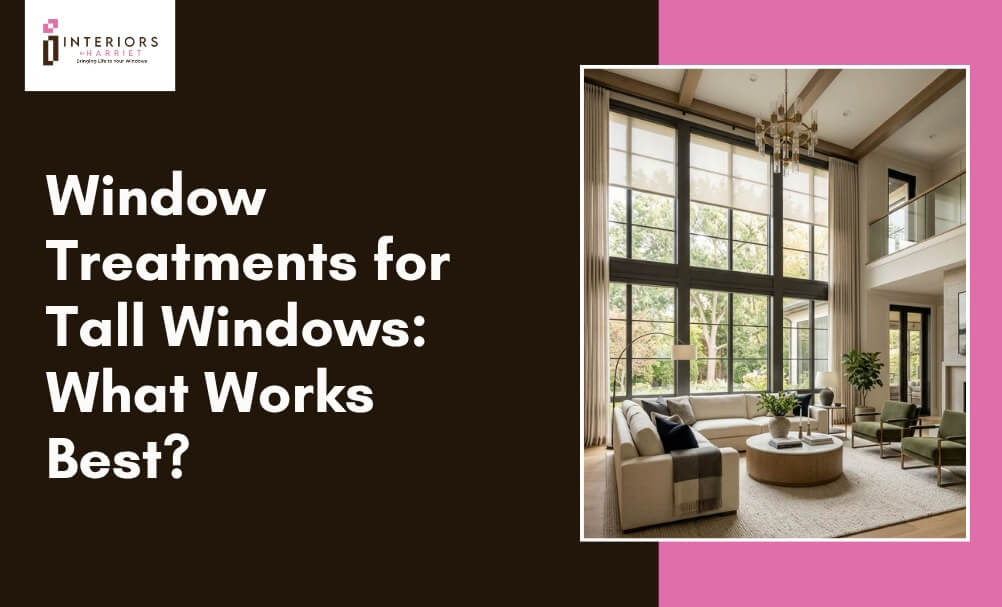
The best window treatments for tall windows should give you privacy, control sunlight, and make your room look beautiful. Motorized shades, custom draperies, and roller shades are great options for tall windows because they offer style, comfort, and easy use.
Tall windows give plenty of natural light into your home. They can also make rooms feel bigger, brighter, and more open. But, finding right window coverings can be difficult because tall windows need special care and proper measurements.
Curtains that are too short may look out of place. Blinds that are too small may not fit properly. High windows can also be hard to reach, making manual shades difficult to open and close. The good news is that there are many beautiful and practical options available.
This guide will cover a variety of window treatments for long windows and showrooms. We will discuss motorized shades, custom draperies, roller shades, and other layered window treatments to style your home. You will learn some best ways to add privacy to your windows and filter sunlight to best enjoy your home.
Why Are Tall Windows Harder to Cover?
Before jumping into product recommendations, it helps to understand exactly what makes tall windows more demanding than their standard counterparts.
Greater Window Height
Most off-the-shelf window treatments are manufactured to fit common window sizes. Tall and oversized windows often fall outside those standard dimensions, which means a straight trip to a home improvement store rarely produces workable results. Custom measurements and often custom fabrication are necessary.
Hard-to-Reach Controls
A window that stretches eight, ten, or twelve feet high doesn’t lend itself to manual operation. Cords, wands, and lift handles that work perfectly on a standard window become nearly impossible to reach on a tall one. This alone makes the choice of operating mechanism one of the most important decisions for large window treatments.
More Natural Light
Large areas of glass are beautiful, but they also admit a significant amount of sunlight. Without the right window coverings for tall windows, that light can cause glare on screens, fade furniture and artwork, and make rooms uncomfortably warm during peak sun hours.
Challenges
Tall windows usually show a lot of the interior of a room. After the sun sets, the light in the room makes the interior visible from the outside. You have to take privacy into account when choosing fabric and opacity.
Design Proportions
A treatment that looks good on a small window can look bad on a large window because it can appear small, flimsy, or lost on a large surface. The treatment has to be in good proportion with the window and the room as a whole.
Best Window Treatments for Tall Windows
There’s no single answer that works for every tall window, but several product categories consistently perform well in these applications.
Motorized Shades
For hard-to-reach windows, motorized shades are often the most practical solution available. Remote operation eliminates the need to physically access the window, and motorization can be paired with roller shades, cellular shades, and other shade styles. More on this below.
Custom Draperies
Make an impact with tall windows by using long, floor-to-ceiling drapery panels. These panels create visual impact by breaking up large expanses of glass and framing window views, and can be made in a fabric or texture of your choice.
Roller Shades
Great for tall, modern windows, roller shades offer an unobtrusive way to achieve privacy and block light. They can be made in a variety of opacity levels and come in a wide range of colors.
Cellular Shades
Cellular shades are designed to provide insulation. Each cell has a honeycomb design which can trap air and help regulate the flow of heat through the glass. This is important for very large windows, as heat loss can occur through the glass.
Blinds
Traditional blinds can work on larger windows in some cases where control of the amount of light that enters a room is important. However, large, heavy blinds can be difficult to operate and therefore may need to be evaluated on a case-by-case basis.
Layered Window Treatments
Layering a functional shade with decorative drapery panels gives tall windows the best of both worlds; practical light and privacy management from the shade, combined with the softness, color, and visual depth that only fabric drapery can provide.
The right choice ultimately depends on your window dimensions, the room’s architectural character, how much natural light you want to manage, and how the treatment needs to operate day-to-day.
Are Motorized Shades Best for Tall Windows?
For many homeowners, the answer is yes and for good reason. Tall and hard-to-reach windows are exactly the kind of application that motorization was designed to solve.
With motorized window treatments, operating a shade twelve feet off the ground becomes as simple as pressing a button. Wall controls, handheld remotes, and compatible smart-home systems can all provide remote operation without requiring anyone to physically reach the window. Multiple shades in the same room can often be grouped and operated together, which is particularly useful when a single wall features several tall windows side by side.
Beyond convenience, motorized shades for tall windows also tend to look cleaner. There are no dangling cords or wands to manage, which matters on windows where the treatment is a prominent visual feature of the room. For windows that are genuinely difficult to access, motorization also reduces wear on the product, since the mechanism handles the movement rather than manual effort.
Specific controls, smart-home compatibility, and scheduling features vary depending on the motorization system selected, so it is worth discussing your needs with a professional before you choosing a system.
Custom Draperies for Tall and Floor-to-Ceiling Windows
Few window treatments make as powerful an architectural statement as custom, full-length draperies on a tall window. Well-balanced floor-to-ceiling panels can make a space feel taller.
Full-Length Drapery Panels
Drapery panels that extend from ceiling to floor make a strong architectural statement by emphasizing the height of a space rather than interrupting it. If a window is tall enough, draperies can create a beautiful, dramatic effect that other treatments can’t replicate.
Fabric Selection
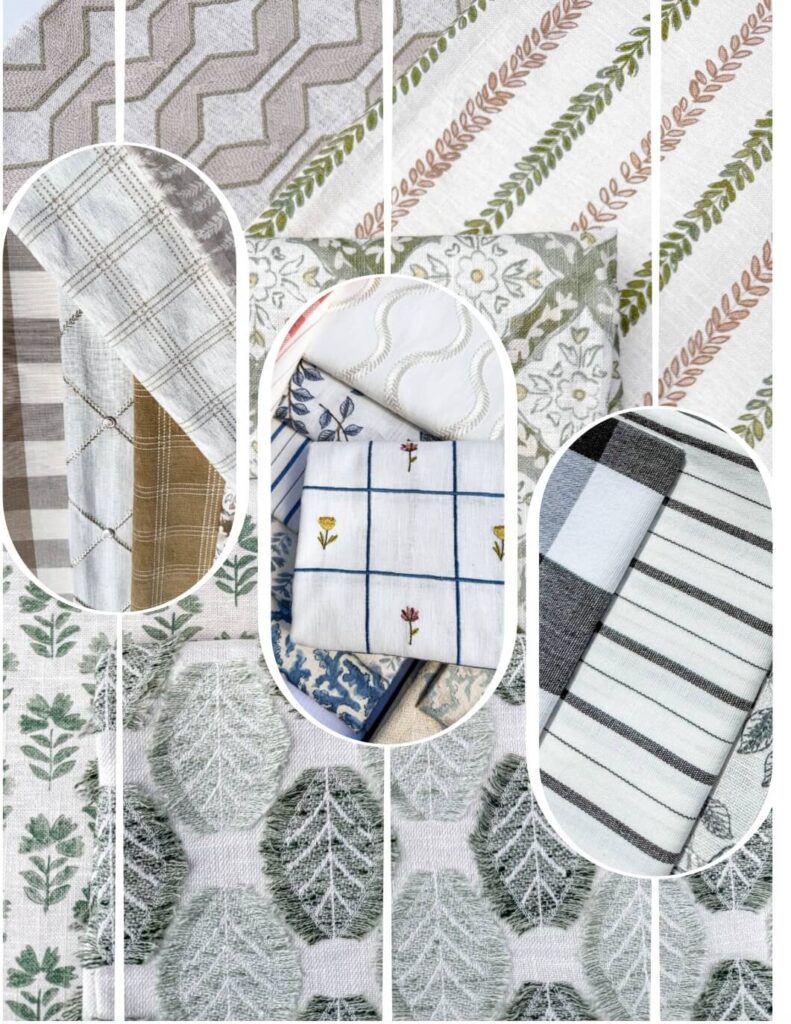
Heavier drapery fabrics collect and hold more volume and create a sense of luxury. A lighter fabric, however, can make a space feel airy and soft. Both can help elevate the look of tall windows, depending on the effect you’re going for.
Drapery Hardware
Rods and rings must be able to withstand the weight of the fabric, and the right hardware must be selected to accomplish this while integrating design elements of the space.
Layering Draperies with Shades
In a tall living or dining space, a custom shear or roller shade, positioned behind or inside drapery panels, provides softness and adds functional design elements. This may even aid in creating a space that is tailored and elegant while serving a purpose.
Roller Shades for Tall Windows
Roller shades are a strong choice for tall windows in contemporary interiors. Their proper, clean, flat profile suits modern architecture, and even their small visual footprint means the window itself remains the focal point.
Available in a range of opacities from sheer solar screens that reduce glare while preserving the view, to room-darkening fabrics that block light almost entirely, roller shades give homeowners meaningful flexibility in managing natural light and privacy.
Motorization pairs naturally with roller shades on tall windows, making remote operation straightforward.
One important consideration: roller shades have maximum fabric width limitations, and wide tall windows may need to be divided into varied shades rather than covered with one treatment.
Cellular Shades for Tall Windows
Cellular shades give a compelling combination of light control, privacy, and thermal performance. Their distinctive honeycomb structure creates insulating air pockets within the fabric, which helps reduce heat transfer through large glass surfaces. According to U.S. Department of Energy, cellular shades are among the most effective window coverings for reducing energy loss through windows.
For tall windows in climates with significant seasonal temperature swings, that insulating performance can translate to meaningful energy savings over time. Cellular shades are mainly available in single-cell and double-cell configurations, with single-cell suitable for moderate climates and double-cell offering stronger insulation where needed. Light-filtering and room-darkening options are both available, and motorization is compatible with most cellular shade systems.
For more on this topic, see How Energy Efficient Window Shades Lower Heat Loss.
Layered Window Treatments for Tall Windows
Using curtains and shades together is a great way to make tall windows look beautiful. It is also a popular choice for modern and luxury homes. When choosing window treatments for tall windows, this combination offers both style and comfort.
Shades help control sunlight and provide privacy during the day. You can easily adjust them to reduce strong sunlight and glare. Curtains add color, softness, and warmth to your room. They also make tall windows look more stylish.
Together, curtains and shades give windows a complete and beautiful look. You can choose fabrics and colors that match your home.
This combination works properly in living rooms, bedrooms, and dining areas. It helps you enjoy natural light while keeping your room comfortable and private.
Window Treatments for Two-Story Windows
Two-story windows and those that are located higher up from the floor pose a unique problem. Ease of access to clean the windows, operate them, and replace them is an issue that needs to be considered. Sun glare on higher-up windows may be difficult to control if there is no treatment done to cover the entire height of the glass.
Motorized treatments are particularly valuable in these situations, since manual operation of treatments positioned twenty or more feet above the floor is rarely practical. Professional design planning from the outset can prevent expensive problems later.
Window Treatments for Tall Living Room Windows
Living rooms frequently contain the tallest windows in the home, and they’re spaces where both natural light and design impact really matter. The goal is usually to balance the room’s openness and brightness with practical control over glare especially where televisions, seating, and artwork are involved.
Custom draperies, motorized shades, and layered treatments all perform well in tall living room windows. Where a wall features multiple windows, coordinating treatments across all openings, rather than treating each window independently creates a more cohesive and architecturally intentional result.
How to Maintain Privacy Without Covering the View
Privacy is one of the most common concerns with tall windows, and the solutions aren’t always obvious. The key factors to understand:
Light-Filtering Treatments
Light-filtering shades and sheers soften incoming daylight while providing some daytime privacy from outside. The degree of privacy they provide depends on the fabric’s opacity and the light conditions inside and outside the room.
Adjustable Treatments
Treatments with adjustable coverage such as roller shades or cellular shades, allow homeowners to change how much of the window is covered at different times of day. This flexibility is especially useful in spaces that shift between active daytime use and evening relaxation.
Layered Treatments
Layering provides the greatest range of choices. By day, a sheer panel can provide a soft touch while drapery panels remain open. By night, closing the drapes gives full privacy without a stark straight line of a plain shade.
A point to be made here: No sheer or light filtering fabric provides complete privacy once the lights are on in a room and after dark. For true nighttime privacy, a room-darkening fabric would be required.
How to Control Glare and Strong Sunlight
Tall windows can bring remarkable natural light into a room; but that same light becomes a problem when it falls across a television screen, a computer monitor, polished surfaces, or art hanging on a nearby wall.
Opacity of fabric plays the most important role in glare management. Solar screen fabrics are designed to block glare. Solar or light-filtering fabrics can be incorporated in various treatments, such as roller shades, cellular shades, or layers of treatments. The position and orientation of the window also has to be taken into account. South and west windows require more management of light and solar gain than north windows.
Scheduled automation of motorized operation also can be a good solution, allowing shades to lower automatically during peak sun hours.
Should Tall Windows Have One Large Shade or Multiple Shades?
This depends on several factors: the total window width, whether the window is a single unit or multiple sections, product size limitations, desired symmetry, and how the treatment will be operated.
A single large shade creates a clean, seamless appearance and can be particularly effective on a single-unit window. Multiple shades allow for more flexible control, each section can be adjusted independently, and may be the only viable option for very wide windows, since all shade products have maximum width limitations.
Motorization makes multiple shades easy to operate as a group, eliminating the main practical disadvantage of having more than one treatment across a wide opening. A professional evaluation of the window dimensions before ordering is essential.
How High Should Draperies Be Hung on Tall Windows?
There’s no universal rule that applies correctly to every room, and any advice to always mount a rod a fixed number of inches above the window frame should be treated with skepticism. The right height is based on ceiling height, window proportions, the presence of crown molding or architectural trim, the weight and drape of the fabric, and the overall design intent of the room.
On very tall windows, mounting hardware near the ceiling and allowing panels to fall to the floor often creates the most proportional and elegant result, but the specifics should always respond to the actual dimensions and details of the individual room.
Choosing Colors and Fabrics for Tall Window Treatments
Because tall windows occupy so much visual real estate, fabric and color choices are more visible and more consequential than they would be on smaller windows.
For a soft, airy look: Cream, warm white, natural linen, and other neutral tones create an open, relaxed atmosphere while keeping the focus on the window and the view.
For architectural impact: Richer colors, stronger textures, and chosen patterns may transform tall windows into a proper design statement. This approach works well in rooms with design direction and proper color palette.
For light-filled interiors: Fabrics that manage daylight without visually closing down the window such as light-filtering sheers or soft-colored solar screens, strike a balance between brightness and comfort.
All fabric and color choices should coordinate with the room’s furniture, flooring, wall colors, and other textiles rather than being selected in isolation.
Can La Scala Work for Large Areas of Glass?
La Scala is specifically designed for expansive glass, wider spacing within the material allows natural light to move through the room in a way that feels open and unobstructed, while the bolder scale of the weave creates a stronger architectural presence than finer-textured shades.
For modern spaces with large windows where typical shades feel too small or too subtle, La Scala is a stronger alternative. It is modern enough to complement large expanses of glass in contemporary architecture and design, including lofts, and other types of open-plan living spaces, as well as, tall living rooms. It could also be used to treat windows in modern interiors where the treatment is intended to be part of the room’s overall design.
Professional Measuring Matters More With Tall Windows
On standard windows, small measuring errors are typically fixable. This is not the case with larger windows. A small error on a ten-foot window means the treatment might not fit, or the hardware may not be able to be mounted correctly. This could also mean the treatment operates incorrectly.
Accurate measurement for tall windows needs to account for width and height, mounting depth, trim and molding, any irregularities in the window frame, hardware clearance, and if motorization is involved; the additional mechanical requirements of the drive system.
A professional window treatment measuring service eliminates guesswork from this part of the process. For more detail on why this matters, see Why a Window Treatment Measuring Service Matters.
Why Professional Installation Is Important
Tall treatments are often heavier, harder to handle, and more difficult to position correctly than standard-sized products. Getting the alignment right, securing the hardware properly, and ensuring the treatment operates smoothly from day one are all easier with professional installation, particularly for motorized systems, which require both mechanical and electrical knowledge to set up correctly.
For a detailed overview of what the process involves, see What to Expect During Blinds and Shades Installation.
Common Mistakes When Choosing Treatments for Tall Windows
These are the errors that most, lead to disappointing results:
- Purchasing standard-sized treatments without truly verifying they fit the actual window dimensions
- Choosing manual operation on windows that are too tall to reach comfortably
- Ignoring motorization as an option
- Selecting fabric or material based only on appearance, without considering opacity, weight, or performance
- Overlooking glare especially in rooms with screens or artwork
- Failing to plan for nighttime privacy
- Using proportions that don’t suit the window or the room’s scale
- Underestimating the weight of large drapery panels and selecting hardware that isn’t rated for it
- Assuming that what works on one tall window will automatically work on all of them
How to Choose the Right Window Treatment for Tall Windows
A straightforward decision process makes the selection considerably easier:
- Measure the window correctly. Height, width, depth, and mounting location all matter. Professional measurement is strongly recommended for tall windows.
- Decide how much privacy you need. Consider both daytime and nighttime requirements.
- Assess sunlight and glare. South- and west-facing tall windows typically need more robust light management.
- Consider how much of the view you want to preserve. Some fabrics allow outward visibility while managing light; others don’t.
- Choose between manual and motorized operation. For hard-to-reach windows, motorization is usually the more practical long-term choice.
- Match the treatment to the room’s architecture. A treatment that suits a contemporary open-plan space may look out of place in a traditional room.
- Select the right fabric or material. Weight, opacity, texture, and color all affect the finished result.
- Plan for professional installation. Especially for large, heavy, or motorized treatments.
For unusually tall or architecturally complex windows, a professional consultation before making any product decisions is always time well spent.
Frequently Asked Questions About Tall Window Treatments
What are the best window treatments for tall windows?
The most effective options are motorized shades, custom draperies, roller shades, cellular shades, and layered treatments that combine shades with drapery panels. The right choice depends on the window’s dimensions, the room’s architecture, and how much light control and privacy you need.
Are motorized shades good for tall windows?
Yes. Motorized shades are one of the most practical choices for tall windows because they eliminate the need to physically reach the treatment to operate it. Remote controls, wall switches, and smart-home integration make daily use simple and convenient.
How do you cover very high windows?
Professionally measured shades, motorized systems, and custom-fabricated treatments are the most reliable solutions. For windows that are genuinely difficult to access, motorization is strongly recommended to make everyday operation manageable.
Should tall windows have curtains or shades?
Either can work well, and many designers recommend both. A functional shade provides light control and privacy throughout the day, while drapery panels add softness, height, and decorative impact. Layering gives the most flexibility and tends to produce the most finished result.
Do tall windows require custom window treatments?
Not always, but unusual dimensions and access requirements frequently make custom solutions worth the investment. Standard products often don’t fit correctly, and the cost of remediating a poor fit on a tall window typically exceeds the initial savings.
The Right Treatment Makes Tall Windows an Asset, Not a Challenge
The best window treatments for tall windows do more than cover glass, they complement the architecture, manage practical concerns like privacy, sunlight, and glare, and make window a deliberate part of room’s design.
Motorized shades simplify operation on hard-to-reach windows. Custom draperies emphasize height and add elegance. Roller shades bring a clean, contemporary look to modern interiors. Cellular shades contribute insulating performance alongside light control. And layered treatments combine all of the above into something that’s both functional and genuinely beautiful.
Tall windows deserve thoughtful, properly scaled solutions, not whatever happens to be in stock. For guidance on custom shades, draperies, motorized treatments, measuring, and professional installation, Interiors by Harriet can help you find the right solution for your specific windows and space.
Schedule your window treatment consultation with Interiors by Harriet today.