Bedroom Window Treatment Ideas for Comfort and Privacy
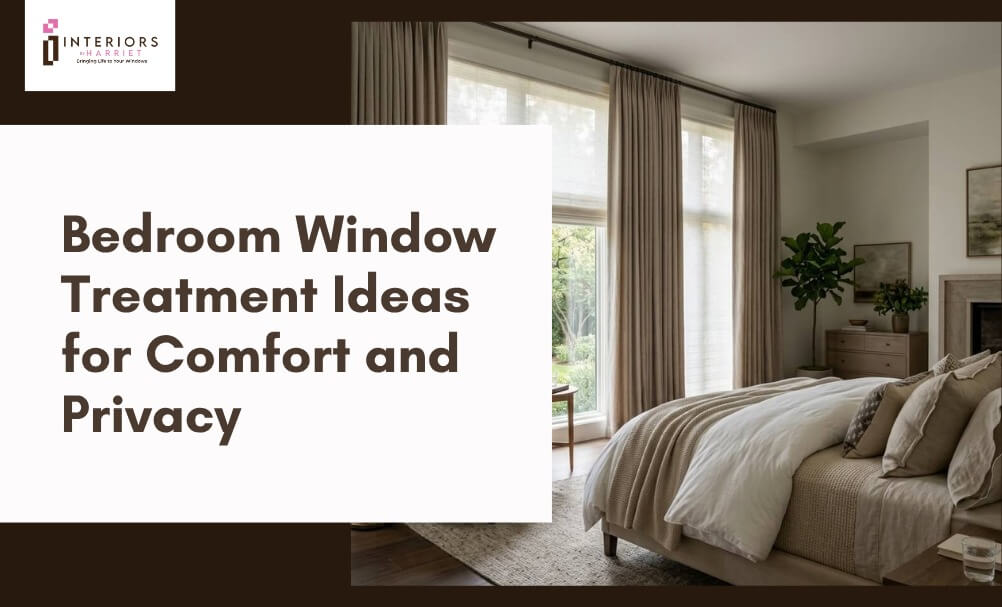
The best bedroom window treatment ideas should give you privacy, control unwanted light, and make your bedroom more comfortable. The right choice can also help create a calm and relaxing space for better rest.
Bright morning sunlight can wake you too early, while streetlights may make it harder to sleep at night. You may also need more privacy if your bedroom faces a street or a nearby home. Good window treatments can help solve these everyday problems while adding beauty to your room.
There are many options to consider. Blackout window shades can help darken the room, while custom draperies add softness and style. Layered window treatments can give you more control over privacy and natural light. You can also choose motorized bedroom shades for added convenience.
In this guide, we will explore practical bedroom window treatments to help you find the right balance of privacy, comfort, light control, and style.
What Should a Bedroom Window Treatment Do?
Before exploring specific products, it helps to define what you’re actually asking a window treatment to accomplish. Most homeowners need more than one thing from a single window.
Provide Privacy
Bedrooms require a higher level of privacy than most other rooms. Street-facing windows, ground-floor bedrooms, and rooms near neighboring homes all present different privacy challenges. The right window treatments for privacy account for both daytime and nighttime conditions because a light-colored shade that works well during the day may become nearly transparent after dark when your lights are on inside.
Control Natural Light
Morning sunlight can be energizing or disruptive, depending on which direction your window faces and when you need to wake up. Afternoon glare creates heat and discomfort. Nighttime exterior lighting streetlamps, security lights, car headlights can interfere with sleep. Good bedroom window coverings address all three scenarios.
Support a Comfortable Bedroom
Windows are one of the primary points of heat gain in summer and heat loss in winter. Certain window treatments, particularly cellular shades and lined draperies, help manage this transfer, keeping bedrooms more comfortable year-round.
Complete the Interior Design
Practical performance matters, but so does how a treatment looks. Bedroom window design should feel intentional coordinating with bedding, furniture, flooring, and wall colors rather than appearing as an afterthought.
Best Bedroom Window Treatment Ideas for Comfort and Privacy
Here are the most effective options for bedrooms, each offering a different combination of light control, privacy, and style.
Blackout Shades
Blackout window shades are designed to block a high percentage of incoming light, making them the strongest option for homeowners who need serious room darkening. They work particularly well for shift workers, light-sensitive sleepers, and children’s rooms. When properly fitted, they significantly reduce both morning sunlight and nighttime exterior lighting.
Cellular Shades
Cellular shades (also called honeycomb shades) provide a softer appearance while offering meaningful insulation through their layered cell structure. They’re a strong choice for bedroom privacy shades because they come in a range of opacities from light filtering to room darkening and their clean profile suits a variety of design styles.
Roman Shades
Roman shades offer fabric softness with a tailored, structured look. When raised, they fold neatly; when lowered, they present a smooth panel of fabric. This makes them a natural fit for bedroom drapery ideas that prioritize a polished aesthetic alongside function.
Custom Draperies
Custom bedroom draperies add warmth, texture, and visual height to a bedroom. Floor-length panels in lined fabric provide genuine privacy and light control while introducing color, pattern, or softness that other treatments can’t replicate. They also layer beautifully over shades.
Blinds
Bedroom blinds and shades give homeowners precise control over light direction and privacy. Tilting the slats allows you to adjust incoming light without fully closing the treatment useful for bedrooms where some daylight is welcome but direct glare isn’t.
Shutters
Plantation shutters offer a more architectural look, with adjustable louvers that allow flexible light control. They’re durable, easy to clean, and add a structural quality to bedroom windows that fabric treatments don’t provide.
Blackout Window Shades for Better Light Control
Blackout window shades are a great choice when you want to reduce unwanted light in your bedroom. They are made with materials that block most incoming light and help create a darker, more comfortable space for sleeping.
Blackout and room darkening shades are not exactly the same. Blackout shades provide stronger light control. Room darkening shades reduce a large amount of light but may still allow some soft light into the room. Small gaps around the sides of either shade may also let light in, depending on the fit and mounting style.
Blackout shades can be especially helpful for:
- Bedrooms near bright streetlights
- East-facing rooms with early morning sun
- People who sleep during the day
- Children’s rooms used for afternoon naps
- Bedrooms with TVs or media areas
A darker bedroom can also support a better sleeping environment. The CDC provides helpful advice on creating a dark and comfortable sleep environment.
For stronger light control, consider pairing blackout shades with custom draperies.
Bedroom Window Treatments for Privacy
Privacy needs vary significantly depending on the bedroom’s position in the home and its relationship to the street and neighboring properties.
Street-Facing Bedrooms
These windows require the highest level of privacy coverage. Opaque or blackout-rated treatments are often the most practical choice, particularly for ground-floor rooms where passersby have a direct sightline.
First-Floor Bedrooms
Daytime and nighttime privacy work differently here. During the day, interior rooms are often darker than the outside, so sheer or light-filtering fabrics can provide reasonable privacy without blocking the view. At night, the situation reverses interior lighting makes the room visible from outside, so a more opaque treatment is needed.
Bedrooms Near Neighboring Homes
The opacity of a window treatment should reflect how close and how directly a neighboring home faces the window. Light-filtering fabrics that work on a private suburban lot may not be sufficient for a bedroom that faces another home’s window at close range.
Privacy Without Losing All Natural Light
Light-filtering bedroom shades are an excellent middle-ground option. They soften and diffuse incoming light while maintaining a degree of daytime privacy. For homeowners who want both, layering a light-filtering shade with a drapery panel provides flexible control throughout the day.
Light Filtering vs. Blackout Shades for Bedrooms
| Feature | Light Filtering | Blackout |
|---|---|---|
| Natural Light | Higher | Very low when closed |
| Privacy | Good* | High |
| Room Darkening | Moderate | Strong |
| Soft Daylight | Excellent | Limited when closed |
| Bedroom Use | Daytime comfort | Sleep/light control |
| Design Options | Extensive | Extensive |
*Privacy performance depends on fabric opacity and lighting conditions.
The right choice depends on the bedroom’s specific light challenges and how the room is used. Many homeowners find that combining both a blackout shade for overnight privacy and light control, paired with a light-filtering drapery or sheer gives them the most flexibility.
Layered Window Treatments for Bedrooms
Layering is one of the most effective bedroom window treatment ideas for homeowners who need flexible performance and a more complete design.
A typical layered approach combines a shade with custom draperies. The shade manages everyday light and privacy, operating smoothly from fully open to fully closed. The draperies add softness, depth, texture, and an additional layer of coverage when needed and they make a significant visual difference in how a bedroom feels.
Benefits of layered treatments include:
- Flexible light control at different times of day
- Stronger privacy, especially at night
- Visual depth and softness that a single treatment can’t achieve
- A more personalized, designed appearance
- Additional coverage at the sides and edges of windows
Layered window treatments also allow homeowners to work with contrasting or complementary fabrics a textured blackout shade beneath a soft linen drapery, for example creating a more refined result than either treatment could achieve alone.
Bedroom Drapery Ideas for a Softer Interior
Custom draperies have a way of changing how a bedroom feels at a fundamental level. Floor-length panels soften the walls, draw the eye upward, and add a quality that other window treatments don’t replicate.
When selecting bedroom drapery ideas, consider:
- Fabric weight and opacity: Lined draperies provide better light control and a richer appearance than unlined panels.
- Pattern and color: Subtle textures and gentle patterns tend to age better than bold prints in a bedroom setting.
- Hardware: Decorative rods and rings contribute to the finished look. Simple, well-made hardware suits most bedroom styles.
- Length: Floor-length panels those that just graze or gently pool on the floor create the most polished result.
- Coordination: Draperies don’t need to match the bedding exactly. They should complement the room’s palette and feel like part of a considered whole.
Custom draperies allow fabric selection that’s specific to the room rather than limited to what’s available off the shelf an important distinction when you’re trying to achieve a particular finish.
How to Choose the Right Color for Bedroom Window Treatments
Color selection doesn’t need to be complicated. A few simple principles help most homeowners make a confident decision.
For a calm, restful bedroom: Cream, soft white, warm gray, and gentle beige tones work across a wide range of interior styles. They don’t compete with other elements and tend to feel settled and easy over time.
For more character: A subtle pattern or a color that echoes an accent already present in the room a shade of blue from the bedding, or a warm terracotta from nearby artwork adds personality without overwhelming.
For a luxury look: Rich textures, quality fabrics with subtle sheen, and carefully considered layering tend to read as luxury bedroom window treatments more than any specific color. The finish and construction matter more than a dramatic shade.
Energy-Efficient Bedroom Window Treatments
Windows are a primary source of unwanted heat transfer in both summer and winter. Certain window treatments help manage this not by replacing good windows, but by adding an additional layer between the glass and the room.
The most effective options for energy efficiency include:
- Cellular shades, whose honeycomb structure traps air and slows heat movement through the window area
- Lined draperies, particularly those with thermal or blackout lining
- Layered treatments, which combine shade and drapery to create multiple insulating layers
- Properly fitted shades, installed with minimal gaps at the edges
The U.S. Department of Energy has published guidance on energy-efficient window coverings, noting that window treatments can help reduce heat gain in summer and heat loss in winter when selected and used appropriately. For bedrooms with large windows, west-facing exposures, or older glass, this benefit is particularly relevant.
Are Motorized Bedroom Shades Worth It?
For many homeowners, motorized bedroom shades are one of the more practical upgrades available in custom window treatments and the reasons go beyond convenience.
The everyday benefits include:
- Adjusting shades without leaving bed in the morning
- Operating multiple windows simultaneously from a single control
- Easier operation for tall or hard-to-reach windows
- Scheduling shades to open or close at set times
- A cleaner visual result, with no operating cords or wands visible
- Consistent positioning each time the shade operates
For bedrooms with several windows or larger glass areas, motorization simplifies what would otherwise require multiple manual adjustments. Available automation features including app control, voice integration, and timer scheduling vary depending on the system selected.
Bedroom Window Treatments for Large Windows
Large windows require more careful planning than standard ones. Challenges specific to larger glass areas include:
- Greater incoming sunlight and a higher need for effective light control
- More significant privacy exposure, particularly for wide or floor-to-ceiling windows
- Visual scale a treatment that looks proportionate on a standard window may appear undersized on a large one
- Treatment weight and the mechanics of operation
- Furniture placement relative to the window
For large bedroom windows, motorized bedroom shades are often the most practical operating solution, eliminating the need to reach across a wide span. Shade products designed for larger openings with appropriate weight distribution and hardware are worth discussing with a window treatment designer before selecting.
Small Bedroom Window Treatment Ideas
Smaller bedrooms benefit from treatments that keep the space feeling open rather than visually crowded.
Effective approaches for smaller windows include:
- Inside-mounted shades, which don’t extend beyond the window frame and preserve a clean visual line
- Light neutral colors that blend with the wall rather than drawing attention to themselves
- Roller or Roman shades with minimal visual bulk when raised
- Carefully proportioned draperies that don’t overwhelm a small window hung slightly wider than the frame to visually expand the opening without over-scaling the treatment
The goal in a smaller bedroom is to let the window treatment perform its function without making the window feel like the room’s dominant feature.
Bedroom Window Treatments for Different Design Styles
Modern Bedrooms
Clean roller shades, simple cellular shades, and motorization suit modern interiors well. Minimal hardware, streamlined profiles, and neutral fabrics keep the look uncluttered.
Traditional Bedrooms
Custom bedroom draperies, Roman shades in classic fabrics, and shutters all complement traditional interiors. More decorative hardware and richer fabrics woven textures, subtle damasks tend to feel at home here.
Transitional Bedrooms
A tailored shade paired with soft drapery panels is one of the most versatile combinations for transitional design structured enough to feel considered, soft enough to feel livable.
Luxury Bedrooms
Luxury bedroom window treatments lean on fabric quality, custom construction, and layering. Premium materials, carefully selected hardware, and treatments that are made specifically for the room rather than adapted from standard products all contribute to this result.
Common Bedroom Window Treatment Mistakes
A few errors come up repeatedly when homeowners select bedroom treatments without a clear plan:
- Choosing style without addressing privacy, resulting in a window that looks attractive but doesn’t actually provide the coverage needed at night
- Overlooking nighttime privacy, particularly for light-filtering fabrics that become more transparent when the room is lit from inside
- Measuring incorrectly, or not measuring at all before purchasing
- Selecting the wrong opacity for the bedroom’s specific light exposure and privacy needs
- Ignoring morning sunlight, especially for east-facing windows
- Choosing treatments that are difficult to operate, which leads to them being left in one position most of the time
- Hanging draperies too short, which makes ceiling heights feel lower and the treatment feel unfinished
- Forgetting to consider motorization for windows that are large, numerous, or hard to reach
- Failing to coordinate the treatment with other soft furnishings in the room
Custom vs. Ready-Made Bedroom Window Treatments
| Feature | Custom Treatments | Ready-Made Treatments |
|---|---|---|
| Fit | Made for the window | Standard sizing |
| Fabric Choices | Extensive | Limited |
| Light Control | Personalized to the window | Product dependent |
| Privacy | Tailored to specific needs | Varies |
| Design | Highly customizable | Limited |
| Motorization | Often available | Product dependent |
| Professional Guidance | Available | Usually limited |
Ready-made treatments can work for straightforward windows with standard dimensions and basic requirements. Custom window treatments are particularly worth considering when window dimensions are non-standard, when privacy and light control need to be precise, or when the bedroom’s design calls for a specific fabric or finish not available off the shelf.
How to Choose the Right Bedroom Window Treatment
A few direct questions help narrow down the right solution:
- How much privacy do you need? Consider the window’s position relative to the street and neighboring properties.
- How dark do you want the bedroom? Complete room darkening requires different products than moderate light reduction.
- Which direction does the window face? East-facing windows deal with morning sun; west-facing windows with afternoon heat and glare.
- Do you want shades, draperies, or both? Layering offers the most flexibility, but a single well-chosen treatment may be sufficient.
- What colors already exist in the room? The treatment should complement existing bedding, flooring, and wall tones.
- Would motorization simplify daily use? Particularly relevant for multiple windows, tall windows, or households with varying schedules.
- Do you need additional insulation? Cellular shades and lined draperies address this most effectively.
- Are the windows standard, large, or unusually shaped? Non-standard windows may require custom solutions regardless of other preferences.
Why Professional Measuring and Installation Matter
Custom window treatments depend on accurate measurements. A treatment that’s a fraction of an inch off in depth, width, or height affects both appearance and performance.
Accurate measurement requires accounting for:
- Window width and height
- Mounting depth and available space
- Trim profiles and any obstructions
- Inside vs. outside mount preference
- Final alignment across multiple windows in the same room
Professional measuring ensures that custom treatments are fabricated correctly the first time a critical step before any significant investment in fabric, construction, or motorization. Equally, professional installation ensures that treatments hang level, operate correctly, and meet the specifications that were set during the design process.
Frequently Asked Questions About Bedroom Window Treatments
What are the best window treatments for bedroom privacy?
The strongest options for bedroom privacy shades are blackout or room-darkening shades, shutters with adjustable louvers, and custom draperies in lined or opaque fabric. Layering a shade with drapery panels provides both daytime flexibility and stronger nighttime coverage. The right choice depends on the window’s position and surrounding environment.
Are blackout shades good for bedrooms?
Yes blackout window shades are one of the most effective options for bedrooms that need strong light control. They block a high percentage of incoming light through the fabric and work well for shift workers, children’s rooms, and east-facing windows with early morning sun. Small light gaps at the edges are possible depending on the mount type.
Can I have privacy and natural light at the same time?
Yes. Light-filtering bedroom shades allow diffused natural light into the room while providing daytime privacy. For stronger nighttime privacy, layering a light-filtering shade with a drapery panel gives you the flexibility to adjust coverage at different times of day without committing to a fully opaque treatment.
Should bedroom curtains touch the floor?
Floor-length draperies generally create a more polished, finished appearance and make ceiling heights feel taller. That said, the final length depends on the room’s design, the window’s proportion, and personal preference. Some homeowners prefer a slight break at the floor; others prefer a gentle pool of fabric. Neither is incorrect what matters is that the length looks intentional rather than accidental.
Are motorized shades useful in bedrooms?
Motorized bedroom shades offer genuine everyday convenience particularly for adjusting shades without leaving bed, operating multiple windows at once, and scheduling opening and closing times. They’re especially practical for larger windows, hard-to-reach placements, and households with varying wake schedules. The clean, cordless appearance is an added benefit in a bedroom setting.
Final Thoughts
The best bedroom window treatment ideas should make your bedroom more private, comfortable, and relaxing. They should also give you better control over natural light while adding a beautiful finishing touch to your room.
There are many options to choose from. Custom bedroom shades can offer simple light control, while blinds and shutters provide privacy and a clean look. Custom draperies add softness and warmth. You can also combine treatments for more privacy and flexibility. Motorized bedroom shades make opening and closing your window coverings easier each day.
The right choice depends on your window size, sunlight, privacy needs, bedroom style, and daily routine. A proper fit is also important for the best result.
Need help choosing the right option? Schedule a window treatment consultation with Interiors by Harriet today. We can help you create a bedroom that feels comfortable, private, peaceful, and beautifully finished.